They chase. They tumble. They squeal with wild excitement.
And for a moment, the jungle feels like a playground instead of a battlefield.
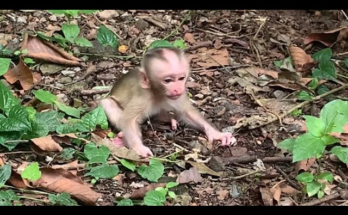
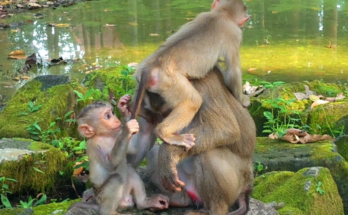
Two juvenile monkeys dart across a sunlit clearing, leaping from branch to branch with reckless confidence. To an untrained eye, it looks chaotic—almost aggressive. They grab, wrestle, nip, and roll across the forest floor.
But this is not violence.
This is friendship in its purest form.
Young monkeys, especially during their juvenile stage, engage in what primatologists call “social play behavior.” It may look rough. It may seem relentless. Yet beneath the tumbling and mock fights lies something essential: learning.
Still, tension lingers.
One pushes the other too hard. A sharp cry echoes. For a split second, everything pauses. Has play turned into real conflict?
The jungle holds its breath.
But then, just as quickly, one reaches out again. A gentle touch. A playful leap. The chase resumes.
The turning point is subtle—but powerful.
They are not fighting. They are practicing.
Through these playful acts, juvenile monkeys develop survival skills. They test strength. They refine balance. They learn social boundaries. Every grab teaches restraint. Every chase builds agility. Every exaggerated bite teaches control.
This is how they prepare for adulthood.
In the wild, survival demands speed, coordination, and the ability to read social cues instantly. Play is their classroom.
But it’s more than training.
Watch closely and you’ll notice something deeper. When one stumbles, the other waits. When one strays too far, the other follows. They groom each other after their mock battles. They rest side by side once exhaustion replaces adrenaline.
They are building trust.
In primate societies, strong bonds formed during youth often shape alliances later in life. Those playful afternoons may determine who shares food, who offers protection, and who stands beside whom during conflict. If you’ve read our earlier feature on how young primates develop survival instincts, you’ll recognize how critical these early interactions are. You might also explore our article on social hierarchies in monkey troops to understand how friendships influence future leadership.
What appears to be simple fun is actually the foundation of complex social intelligence.
And yet, beyond biology and behavior, there is something undeniably touching about it.
They are carefree—for now.
Before dominance struggles. Before territorial disputes. Before the harsh realities of adulthood.
For a brief chapter of their lives, they get to play.
As the sun lowers and shadows stretch across the forest floor, the two young friends climb back into the safety of the trees. Their energy fades, but their bond strengthens.
In a world where survival is never guaranteed, perhaps these playful acts are not just preparation.
Perhaps they are a reminder.
If even wild creatures find time to wrestle, laugh, and build friendship amid danger, what does that say about the importance of play in our own lives?
What do you think—are they just playing, or are they teaching us something too?