Power is never silent in the forest.
It moves in glances, in posture, in who eats first.
Among monkeys, social status is everything.
At first glance, a monkey troop may look chaotic—juveniles chasing one another, mothers grooming, dominant males resting with quiet authority. But beneath this seemingly simple routine lies a complex social structure built on rank, alliances, and survival.
Every member knows their place.
High-ranking monkeys walk with confidence. They claim the safest sleeping spots and feed without hesitation. Lower-ranking individuals wait patiently at the edges, calculating when it is safe to approach. Even infants inherit status through their mothers, shaping their earliest experiences in the troop.
But hierarchy is not just about control. It is about balance.
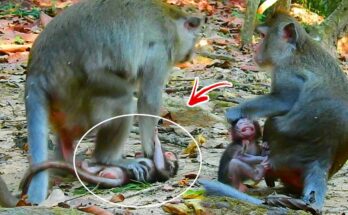
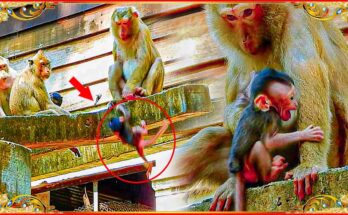
Tension rises when status is challenged. A young male growing stronger may test boundaries. A protective mother may defy a dominant female to defend her infant. These moments crack the surface of stability.
If you’ve followed our earlier story about troop leadership during moments of danger, you’ve seen how dominance can protect—but also intimidate. Leadership in primate society walks a delicate line.
One afternoon, that line was tested.
A mid-ranking male approached a feeding site before a higher-ranking individual had finished. It was a small move—but symbolic. Heads turned. Grooming paused. The air thickened with anticipation.
The dominant male rose slowly.
No immediate attack. Just a stare. In monkey society, eye contact carries weight. It is a silent negotiation of power.
The younger male hesitated. His body tensed, torn between ambition and caution.
This was the turning point.
Instead of escalating into violence, the younger male lowered his gaze and stepped back. Submission restored order. The dominant male resumed feeding, and the troop exhaled as one.
Crisis avoided.
Moments like this reveal the true function of social status among monkeys. Hierarchy reduces constant conflict. Clear roles prevent endless battles for control. Yet it also limits freedom, especially for those born into lower ranks.
As we explored in our feature on infant survival and early bonding, social position influences everything—from access to food to protection during conflict.
But status is not fixed forever.
Alliances shift. Strength grows. Aging leaders eventually lose their grip. In time, new figures rise. The structure evolves, just as the forest does.
What seems harsh from a human perspective is, in reality, a survival system refined over generations. Social status among monkeys is not merely about dominance—it is about maintaining order in an unpredictable world.
And perhaps that is what makes their society so fascinating.
Because when you look closely, their struggles with power, ambition, loyalty, and protection mirror our own.
In a world shaped by hierarchy—whether in the forest or in human communities—how much of our behavior is guided by status, and how much is guided by compassion?